Mega Doctor News
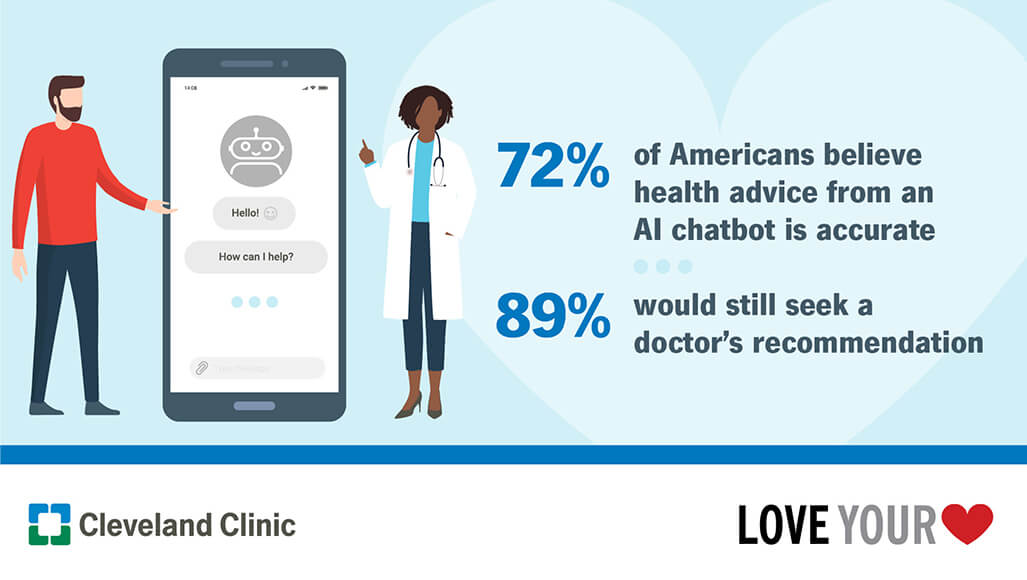
CLEVELAND CLINIC – As advancements in artificial intelligence (AI) continue to revolutionize healthcare, findings from a new national Cleveland Clinic survey illustrate how Americans feel about the emerging role of AI in healthcare with 3 in 5 Americans believing that AI will lead to better heart care. Despite the optimistic outlook, individuals are still cautious about how they use AI when it comes to their health. While 72% of Americans believe the health advice, they receive from a computer chatbot is accurate, 9 in 10 (89%) said they would still seek doctor’s advice before acting on its recommendations.
In addition, although 65% said they would be comfortable receiving heart health advice from AI technology, only 1 in 5 (22%) Americans have sought health advice from a computer chatbot or other form of AI technology.
“The increasing number of advancements in AI and in digital health has the potential to transform healthcare delivery, especially in cardiovascular care,” said Samir Kapadia, M.D., chairman of Cardiovascular Medicine at Cleveland Clinic.

“As clinicians, we are getting a lot of questions from our patients about this topic,” said Dr. Kapadia. “For this year’s survey, we wanted to better understand how people feel about emerging tools like AI and if their health is benefiting from technologies that are already on the market, such as wearables. As these continue to advance, we’d like to educate our patients about the role of AI and technology in assisting healthcare professionals, rather than replacing them.”
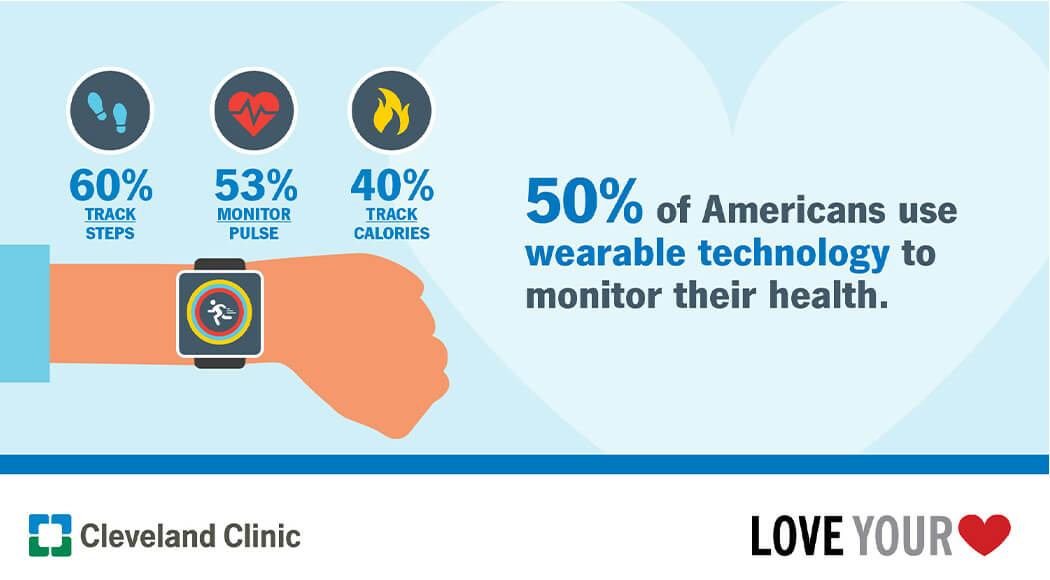
The survey also examined how Americans are using technology to improve their heart health, with 50% saying they use at least one type of technology to monitor their health. Daily step count is the most tracked health-related metric, followed by heart rate and calorie burn among Americans who use such technology. Notably, one-quarter (23%) of Americans said they use monitoring technology to find motivation and/or accountability for achieving their daily activity goals.
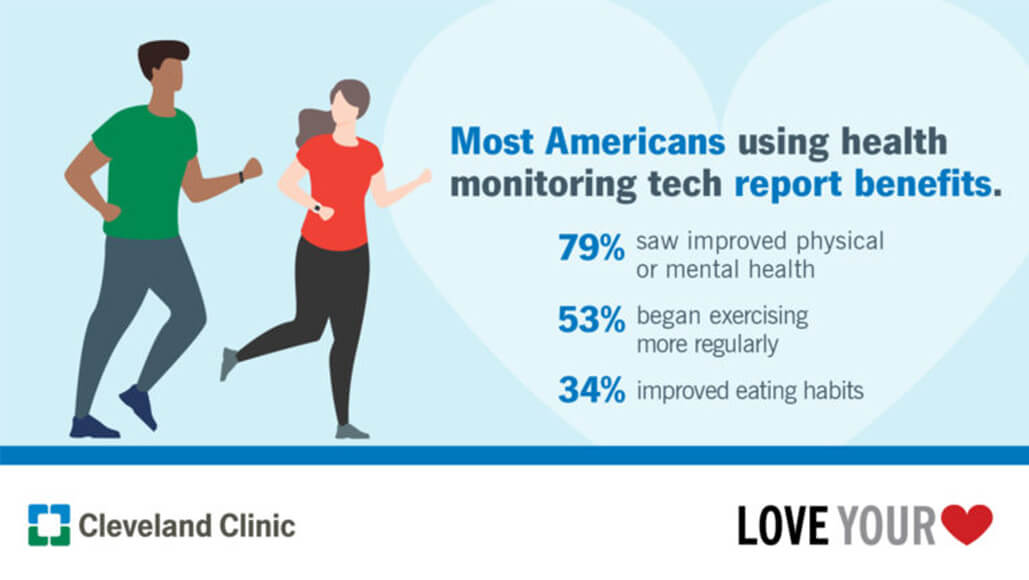
Most Americans using health monitoring technology are experiencing significant physical and mental benefits. According to the survey responses, 4 in 5 users (79%) have noticed positive changes to their physical or mental health.
| Additional results of the survey among those who use health monitoring technology include: |
| 60% of Americans track their daily step count. |
| 53% monitor their heart rate/pulse. |
| 40% track their burned calories. |
| 32% track their blood pressure. |
| 53% say they began exercising more regularly after using wearable technology to monitor their health. |
| 50% are getting in more steps per day than they used to. |
| 34% are improving their eating habits. |
| 27% are more intentional about finding time to de-stress and relax. |
The survey was conducted as part of Cleveland Clinic Heart, Vascular and Thoracic Institute’s “Love your Heart” consumer education campaign in celebration of American Heart Month in February. Cleveland Clinic has been ranked the No. 1 hospital in the country for cardiology and cardiac surgery for 29 years in a row by U.S. News & World Report.
For more information, go to: clevelandclinic.org/loveyourheart
Methodology
An online survey was conducted among 1,000 general population Americans, 18 years of age and older. Respondents were nationally representative regarding age, gender, region, education, household income, race/ethnicity, and urban/rural residency. An oversample of African Americans and Hispanics was collected to reach N=250 total for each. The online survey was conducted by Savanta and completed between Nov. 10-21, 2023. The margin of error for the total sample at the 95% confidence level is +/- 3 percentage points.