
Mega Doctor News
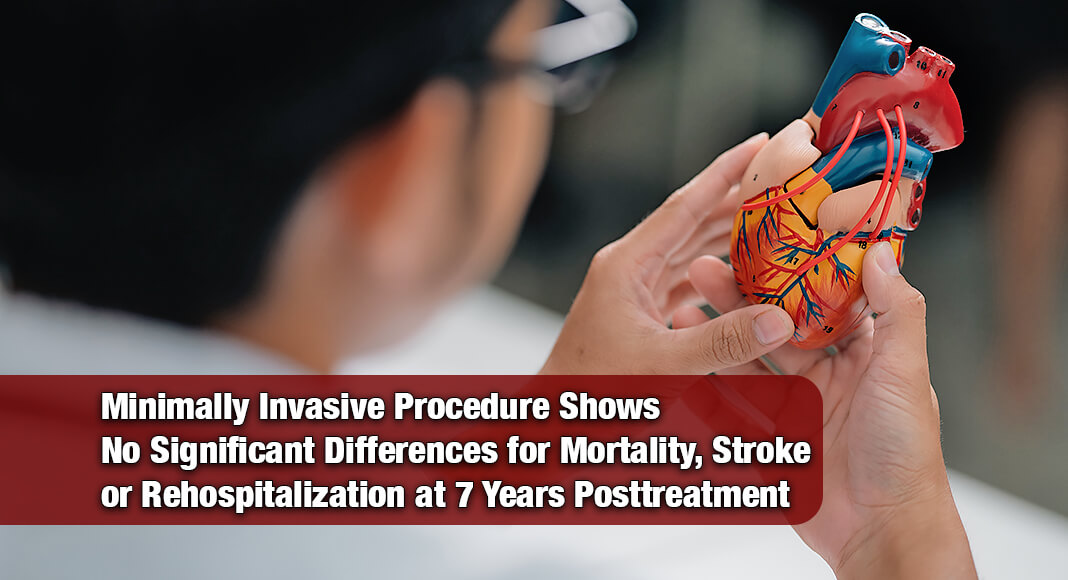
People who underwent a minimally invasive procedure to have their heart’s aortic valve replaced had similar health outcomes years after treatment as people who had surgery, Cedars-Sinai investigators and colleagues report.
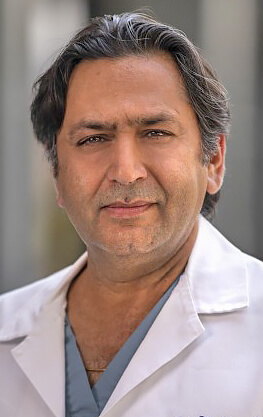
Raj Makkar, MD, an interventional cardiologist in the Department of Cardiology in the Smidt Heart Institute, is senior author of a study published in The New England Journal of Medicine that describes the Phase III clinical trial results.
“These results show that seven years after treatment, health outcomes for patients were similar whether they underwent a minimally invasive procedure or open-heart surgery,” said Makkar, the inaugural director of the Karsh Division of Interventional Cardiology at Cedars-Sinai.

Aortic valve disease affects about 2% of the U.S. population, and risk rises with age, so the disorder is expected to become increasingly common.
The international PARTNER 3 trial involved 1,000 patients at 71 healthcare locations. Study participants had a severe form of aortic valve stenosis, a condition in which the heart’s aortic valve becomes so narrow and stiff that it cannot open fully to allow blood to pass through. The condition can cause heart failure or stroke.
Clinical trial participants were randomly chosen to undergo either open-heart surgery or a procedure called a transcatheter aortic valve replacement, also known as TAVR. All participants received a commercially available bioprosthetic valve called the SAPIEN 3 valve.
During TAVR, an interventional cardiologist threads a catheter through an artery to reach the heart and replace the diseased valve. Previous randomized controlled trials, including an earlier version of PARTNER 3, reported similar outcomes with TAVR and surgery five years after treatment in people with low to high risk for surgical complications.
For this study, investigators limited participation to patients considered to be at low surgical risk. Seven years after treatment, composite rates of death, stroke or rehospitalization related to treatment were 34.6% for TAVR (496 people) and 37.2% for surgery (454 people), a difference that was not statistically significant. The rates of failure for the bioprosthetic valve were similar: 6.9% for TAVR and 7.3% for surgery. In addition, patients in both groups reported comparable quality of life outcomes.
“These rich data exemplify the vital information clinicians need to guide patient treatment,” said Eduardo Marbán, MD, PhD,executive director of the Smidt Heart Institute and the Mark Siegel Family Foundation Distinguished Chair. “We are proud to offer leading-edge clinical care while also advancing the field of cardiology with groundbreaking research.”
The Smidt Heart Institute is a global leader in treating heart valve disease surgically and with transcatheter procedures. Makkar, vice president of Cardiovascular Innovation and Intervention, leads a team of interventional cardiologists who perform almost 800 TAVRs each year.
The investigators next plan to report patient outcomes and valve durability at 10 years posttreatment.
Other authors include Martin B. Leon, MD; Michael J. Mack, MD; Philippe Pibarot, DVM, PhD; Rebecca T. Hahn, MD; Vinod H. Thourani, MD; S.H. Kodali, MD; Philippe Genereux, MD; Samir R. Kapadia, MD; David J. Cohen, MD, MSc; Stuart J. Pocock, PhD; Yiran Zhang, MS; Molly Szerlip, MD; Julien Ternacle, MD, PhD; S. Chris Malaisrie, MD; Howard C. Herrmann, MD; Wilson Y. Szeto, MD; Mark J. Russo, MD; Vasilis Babaliaros, MD; Tamim Nazif, MD; John G. Webb, MD.
The study was funded by Edwards Lifesciences. Makkar receives research grants and travel support from Edwards Lifesciences.
Cedars-Sinai Health Sciences University is advancing groundbreaking research and educating future leaders in medicine, biomedical sciences and allied health sciences. Learn more about the university.