








Mega Doctor News
By Claire Kowalick, UT Health San Antonio
Heart disease is the leading cause of death for people with Type 2 diabetes and people with diabetes are more than twice as likely to experience a heart attack or stroke, according to the American Diabetes Association. While most cardiologists focus on the heart’s hemodynamic function, there is growing interest in the heart’s metabolic processes and how optimizing fuel sources may benefit individuals with heart disease.
Scientists at The University of Texas Health Science Center at San Antonio (UT Health San Antonio) are in the third year of a five-year study funded by the National Institutes of Health’s Institute of Diabetes and Digestive and Kidney Diseases and Max and Minnie Tomerlin Voelcker Fund. Their research explores whether modifying the heart’s energy sources can improve cardiac function. They discovered that increasing ketones in the blood with dapagliflozin, a sodium-glucose cotransporter 2 inhibitor (SGLT2i), improved left ventricle ejection fraction and enhanced blood flow to the heart without altering glucose utilization.

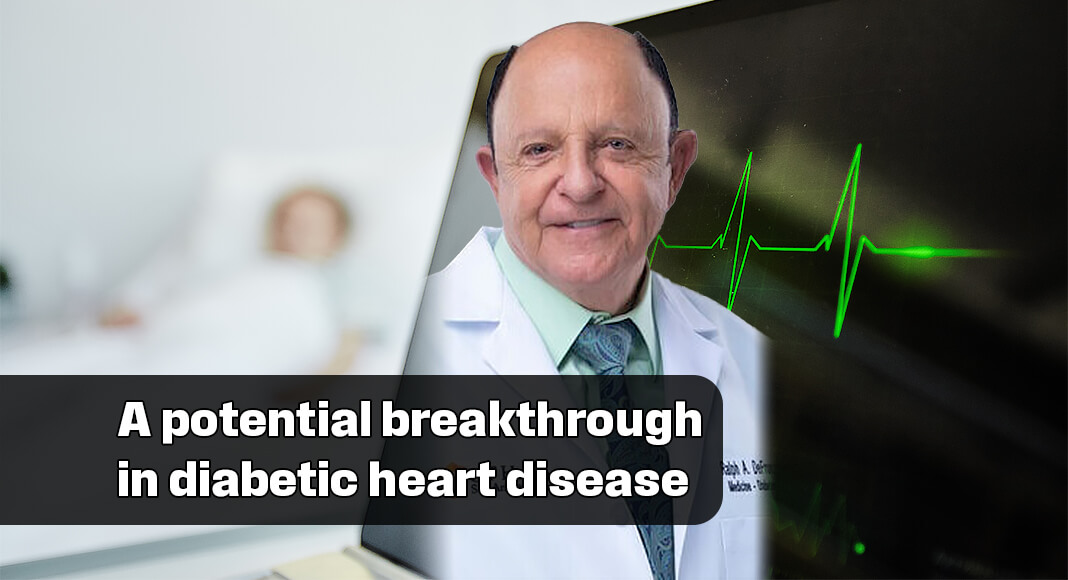
The study was published in the January 2025 edition of Diabetes, the journal of the American Diabetes Association and was highlighted as their Paper of the Month. Principal investigator Ralph A. DeFronzo, MD, chief of the Diabetes Division, deputy director of the Texas Diabetes Institute and professor of medicine, said this novel research could lead to a fundamentally new approach to treating heart disease.
Investigating heart metabolism
Studies using positron emission tomography (PET) published in 2017 by DeFronzo and other UT Health San Antonio scientists confirmed that the cardiac muscle is highly resistant to insulin.
“We think this insulin resistance leads to changes in how the heart metabolizes glucose, free fatty acids and ketones and this plays a major part in the development of heart failure,” DeFronzo said.
Previous research established that heart muscle avidly takes up and metabolizes ketones for energy. The scientists aimed to determine whether modifying the heart’s fuel usage could improve its contractility.
“When you burn ketones, for every mole of ketone that you metabolize, you generate more ATP [adenosine triphosphate] — which is critical for all energy metabolism — with less oxygen consumption than glucose,” DeFronzo said.
During heart failure, the heart cannot generate sufficient ATP for contraction, increasing stress on the organ. Inefficient fuel metabolism demands more oxygen, further taxing the heart and other organs. The scientists proposed shifting the heart’s fuel source from glucose to enhance energy efficiency and reduce cardiac stress.
A metabolic solution to heart dysfunction
In this study, three groups of 12 individuals with both heart failure and Type 2 diabetes, recruited from heart failure clinics at UT Health San Antonio and the Texas Diabetes Institute, were given dapagliflozin, an SGLT2 inhibitor, in various doses. Treated individuals showed dose-dependent improvement in cardiac output, ejection fraction and stroke volume.
Magnetic resonance scans (MRI) showed increased ejection fraction, while PET scans confirmed stable myocardial glucose uptake and improved blood flow.
“Providing more ketones to the heart represents a metabolic approach to how the heart functions, as opposed to giving calcium channel blockers or other drugs that cause the myocardium to squeeze more,” DeFronzo said, emphasizing the profound implications for using SGLT2i drugs to treat heart disease in both diabetic and non-diabetic individuals.
Potential of SGLT2i inhibitors for heart failure treatment
SCLGT2i drugs may help manage heart failure by shifting the body’s energy source from glucose to ketones. These drugs increase glucose excretion through urine, lowering blood sugar. In response, the body metabolizes free fatty acids, producing ketones. These ketones are an easily accessible fuel for the heart, requiring less oxygen and increasing cardiac efficiency. The study findings correlate ketone metabolism with improved cardiac function for this cohort with Type 2 diabetes and heart failure.
Future research will focus on whether the SGLT2i-induced increase in plasma ketones levels directly improves cardiac function or if other hemodynamic effects also contribute.
“This is a completely novel way of potentially treating people for heart failure. We know dapagliflozin works and now we want to understand how it works. This is going to give us a potentially definitive explanation of why ketones are important and just how important they are,” DeFronzo said.
Information Source: The University of Texas Health Science Center at San Antonio (UT Health San Antonio)