







Mega Doctor News

By MedStar Washington Hospital Center
Newswise — Washington, D.C.– Two MedStar Health hospitals are now offering an FDA-approved treatment for patients who have had persistent atrial fibrillation for more than a year. The Hybrid AF™ Convergent Therapy is available both at MedStar Washington Hospital Center and MedStar Union Memorial Hospital in Baltimore. MedStar Health physicians participated in the landmark CONVERGE™ trial, which provided the key data for FDA approval of this treatment in April 2021.
Atrial fibrillation, or AFib, is an irregular heartbeat that occurs when a heart has lost its healthy rhythm. If not properly treated, AFib can lead to blood clots, stroke, other heart-related complications, and even sudden death.

Long-standing, persistent atrial fibrillation (LSPAF) is a particularly challenging form of this condition to treat. Some 45 percent of AFib patients cope with LSPAF, so the Hybrid AF Convergent Therapy is a breakthrough treatment for these patients.
“Historically, patients with LSPAF have been challenging to treat, and about half suffer from progressively worsening symptoms,” said Zayd Eldadah, MD, PhD, director of Cardiac Electrophysiology at MedStar Health. “This hybrid procedure will help improve the lives of millions of patients with severe AFib, and we are thrilled that we now have a new arsenal in our toolbox to treat what was once a very difficult disease.”
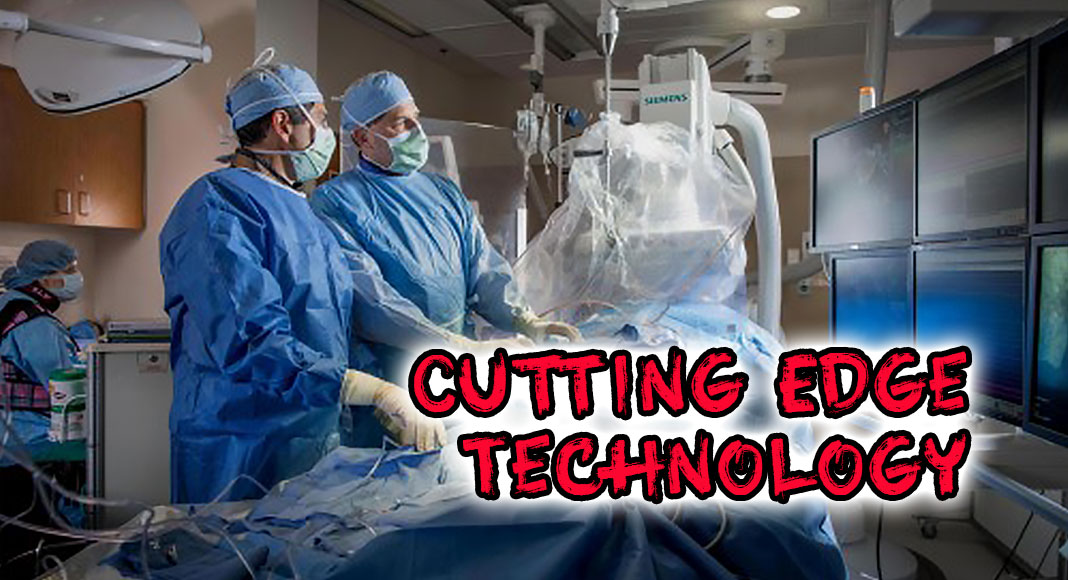
The Hybrid AF Convergent Therapy is a minimally invasive, two-part ablation procedure that uses heat to stop the erratic electrical signals that cause AFib and restore a normal heart rhythm. A cardiac surgeon performs the first procedure by making a small incision under the breastbone, to create access to the heart and then creates lesions or scar tissue on the back walls of the heart. An electrophysiologist then gains access to the inside of the heart and blood vessels through the groin, to deliver therapeutic energy to areas of the heart to destroy the abnormal electrical activity.
“There have been less than optimal outcomes for a population of AFib patients who simply don’t respond as we would like to after endocardial ablation alone,” said Brian Bethea, MD, chief of Cardiac Surgery at MedStar Union Memorial Hospital. “This is the kind of technology we looked to the future for, and now it’s available. This is a double procedure we feel confident in offering our patients with persistent AFib, where the incisions are small, the hospital stay and recovery times are shorter and most importantly, the success rate is high. I’m so proud to be able to offer this to patients at MedStar Union Memorial Hospital.”
MedStar Health has offered convergent therapy for the last decade, and the recent FDA approval has moved the Hybrid AF™ Convergent Therapy to the forefront of treatment options.
AFib is the most common arrhythmia in the U.S. with one out of four adults over 40 developing AFib in their lifetime.


