
Mega Doctor News

by Rutgers University-New Brunswick
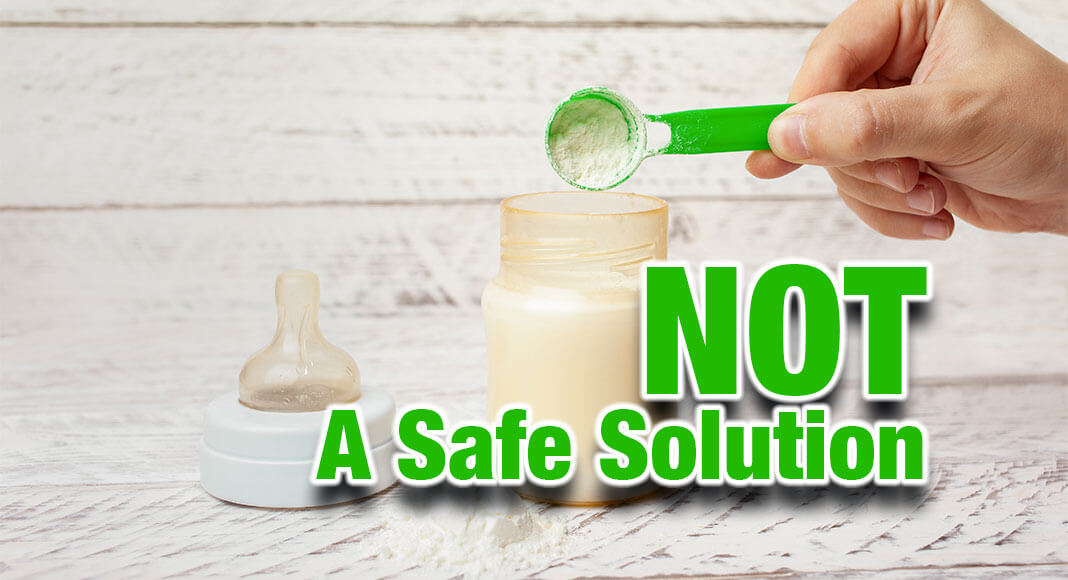
As the baby formula shortage causes parents and caregivers to search for solutions to feed their infants, experts at the New Jersey Poison Control Center, based at Rutgers New Jersey Medical School, are warning families about misinformation circulating online and on social media claiming it is safe to use homemade recipes.
“Even the best intentions can have devastating results,” said Diane Calello, executive and medical director of the New Jersey Poison Control Center and a pediatrician. “Although it may seem safe to use substitutes or make homemade formula to feed your baby, it can be very dangerous and potentially life-threatening.”

Calello discussed what caregivers shouldn’t feed infants and which formula alternatives are safe.
What are unsafe substitutions for formula?
Products like rice drinks, goat’s milk, almond milk, cow’s milk and protein shakes as well as homemade or watered-down formula can quickly lead to severe nutritional deficiency. Commercial infant formula and human breast milk contain essential micronutrients and vitamins babies need to have at each feeding. These additional nutrients are essential to their healthy growth and development. Parents and caregivers should not feed their baby any products that do not contain the necessary daily nutrients.
Some people are feeding their infants honey. In addition to being nutritionally deficient, honey – including products like graham crackers or cereal that have honey as an ingredient – may cause a serious type of food poisoning called botulism in children under 12 months.
What can parents feed their infants if formula is scarce?
If you are not able to get your baby’s formula, it’s important to speak with your child’s pediatrician before making any changes. Your pediatrician can provide guidance as to the safest, available options for your baby, especially if your child has special health needs.
The American Academy of Pediatrics [AAP] has issued new guidance to help caregivers struggling to find baby formula as the shortage worsens. Some initial solutions include checking at smaller stores and drug stores, buying formula online from well-recognized distributors and checking local social media groups dedicated to this issue.
The new advice for alternatives is only for emergency situations when baby formula cannot be found. These alternatives are only meant to be used for a short period of time; they are not permanent alternatives to baby formula. Toddler formula – while not recommended for infants – can be used for a few days if the infant is close to 12 months old. The AAP also says full-term babies can be fed formula made for premature babies for a few weeks if needed. In an absolute emergency, the AAP says soy milk that is fortified with protein and calcium may be an option for a few days for babies who are close to a year old. If you use an alternative, be sure to change back to formula as soon as some is available.
What are the risks of feeding infants with formula that does not meet the U.S. Food and Drug Administration’s nutritional standards?
A recent article in the Centers for Disease Control and Prevention’s Morbidity and Mortality Weekly Reportdiscussed three separate incidences of infants treated in emergency departments for low calcium levels and vitamin D–deficient rickets after being fed homemade formula. In addition, infants fed watered-down formula may develop electrolyte imbalance and brain swelling.
While the FDA is considering accelerated approval of some imported formulas, it is not safe to purchase them right now. Although many formulas sold in Europe have adequate nutrients, they need to be imported with safety considerations in mind, such as maintaining the correct temperature.