








Mega Doctor News

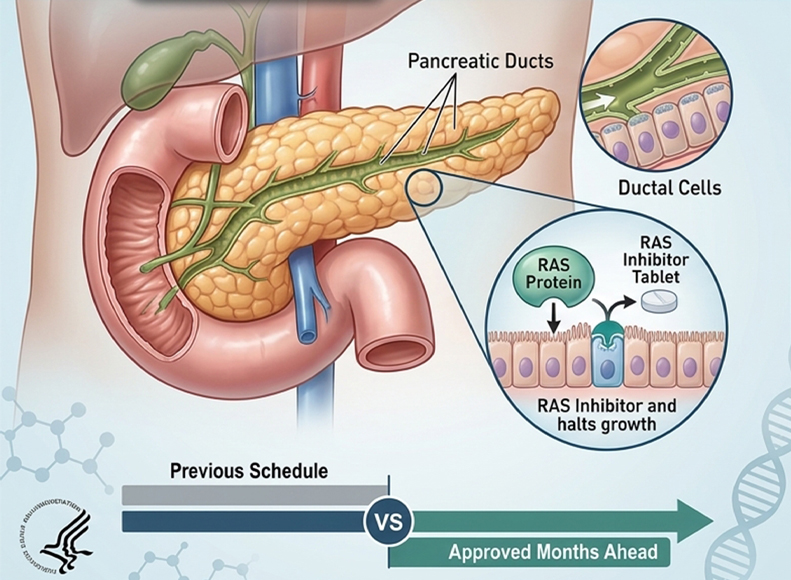
FDA – The U.S. Food and Drug Administration approved Rasonque (daraxonrasib), a RAS inhibitor for the most common form of pancreatic cancer—delivering a new treatment option to patients with advanced pancreatic cancer months ahead of schedule.
This action demonstrates the agency’s commitment to moving with urgency, reducing unnecessary delays and advancing innovative treatments that can make a meaningful difference in the lives of American patients and their families.
Rasonque, a tablet taken once daily, targets multiple forms of a protein called RAS, a key driver of tumor growth in most patients with pancreatic adenocarcinoma, which arises from cells lining the ducts of the pancreas.

“Today’s approval provides a critical new option for patients facing an extraordinarily difficult and historically hard-to-treat cancer. It is our fundamental duty to deliver more cures and meaningful treatments to patients as quickly as possible,” said Acting FDA Commissioner Kyle Diamantas, J.D. “I am immensely proud of the dedicated FDA scientists whose fast, thorough review and relentless commitment made this groundbreaking milestone a reality.”
The approval is for the treatment of adults with metastatic pancreatic adenocarcinoma who have received at least one prior systemic therapy or are not candidates for multiagent systemic therapy.
Approximately 90% to 95% of the 67,000 new cases of pancreatic cancer diagnosed in the United States each year are pancreatic adenocarcinoma, according to the National Cancer Institute. Despite representing roughly 3.2% of all cancer diagnoses, pancreatic adenocarcinoma accounts for a disproportionately high share of cancer deaths, owing to its typically late detection, aggressive disease course, and historically limited treatment options.
In a randomized, open-label, multicenter clinical trial involving 500 adults with previously treated metastatic pancreatic adenocarcinoma, Rasonque improved median overall survival to 13.2 months compared to 6.7 months for standard chemotherapy.
“This drug showed unprecedented results in an area of high unmet need,” said Angelo de Claro, M.D., director of the FDA’s Oncology Center of Excellence. “The approval was granted 6.5 months before the user fee deadline, demonstrating the FDA’s commitment to accelerating the approval of new cancer treatments for patients with serious and life-threatening conditions.”
The FDA granted Rasonque Breakthrough Therapy and Orphan Drug designations. Rasonque received Priority Review for this indication. The application was also reviewed under the Commissioner’s National Priority Voucher pilot program, which is intended to help accelerate the review of therapies that address national public health priorities.
In May, the FDA issued a “safe to proceed” letter allowing the sponsor to initiate an expanded access treatment protocol for Rasonque, enabling patient access to the investigational drug prior to approval under applicable FDA regulations.
The most common side effects of the drug are rash, diarrhea, stomatitis (inflammation of the mouth’s mucus membranes), nausea, fatigue, vomiting, abdominal pain, edema, decreased appetite, and hemorrhage.
The FDA granted the approval to Revolution Medicines, Inc.
Information source: U.S. Food and Drug Administration (FDA)


