Mega Doctor News

In South Texas, a quiet crisis is unfolding—one that too often ends with the loss of a limb, and, in many cases, a life forever changed. Peripheral artery disease (PAD), a condition that silently restricts blood flow to the legs and feet, claims ground long before many patients realize anything is wrong. For thousands of families across the Rio Grande Valley, the first warning sign is not pain or discomfort, but an amputation that might have been prevented.
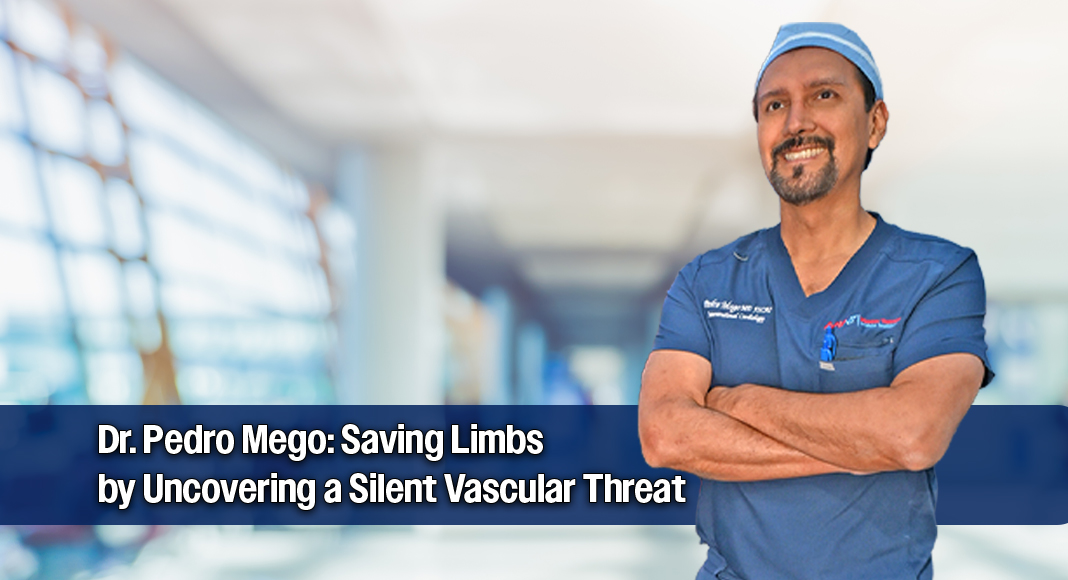
Few physicians have seen this reality as clearly—or responded to it as decisively—as Dr. Pedro Mego. Trained as an interventional cardiologist, Dr. Mego arrived in South Texas expecting to battle heart attacks and strokes fueled by diabetes and obesity. What he did not expect was the sheer number of patients already facing limb loss. That moment reshaped his career and ignited a mission to save legs by restoring circulation before it is too late.
PAD is often misunderstood as a “leg problem,” but its reach goes far beyond the feet. It is part of a widespread vascular disease that affects the heart, brain, and extremities alike. When PAD is missed, it becomes a warning sign ignored—one that signals higher risks of heart attack, stroke, and death. In a region already burdened by chronic disease, overlooking PAD can have devastating consequences.

What makes PAD especially dangerous is its silence. Many patients feel nothing at all while their arteries steadily narrow. By the time pain, wounds, or skin changes appear, the disease may already be advanced. In Texas, where amputation rates continue to rise rather than fall, early detection has become not just a medical goal but a moral imperative.
In this exclusive Mega Doctor News feature, readers will meet a physician whose work is changing the trajectory of vascular care in South Texas. Dr. Mego explains why PAD is so often missed, how simple screening can save limbs, and what patients and families must know to protect themselves. His message is urgent, hopeful, and clear: awareness, early action, and comprehensive care can mean the difference between walking forward—and losing the chance to walk at all.
See related story: