







Mega Doctor News

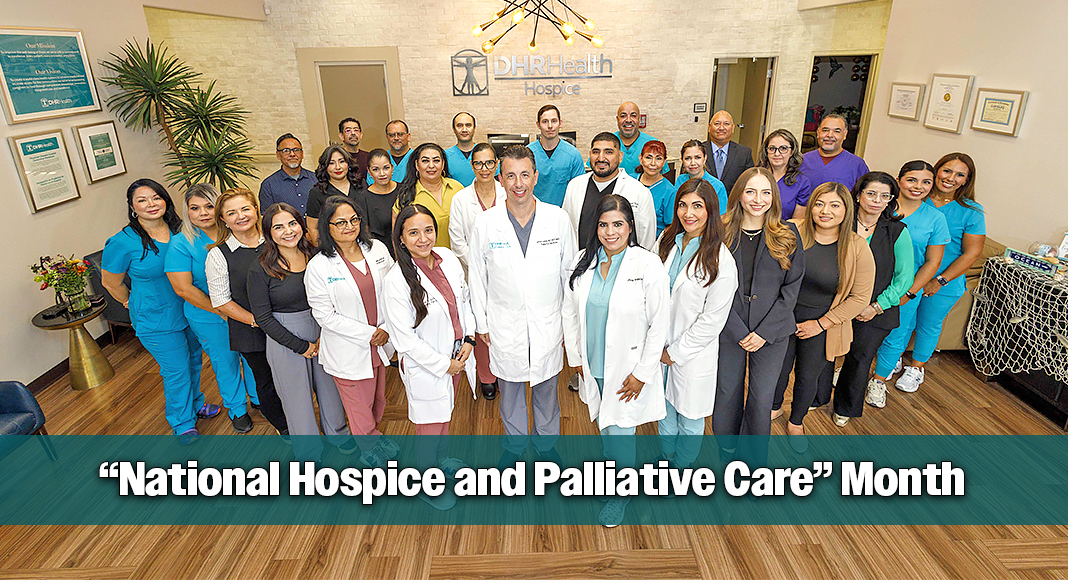
EDINBURG, Texas – DHR Health, one of the largest medical providers serving the Rio Grande Valley, is proud to recognize November as “National Hospice and Palliative Care Month.” This designation highlights the organization’s commitment to treating each patient as a unique individual, honoring their experiences, values, and hopes while providing personalized, high-quality, and compassionate care. DHR Health Hospice is located at 2655 Cornerstone Boulevard in Edinburg.
“At DHR Health Hospice our focus is on supporting the whole patient which is the mind, body and spirit. We focus on caring for each patient as a unique individual, delivering care that respects each patient’s wishes and values, while guiding and supporting their families and loved ones every step of the way. Hospice and palliative care are about more than managing symptoms, they are about recognizing the person at the center of care,” said Dr. James W. Castillo II, DHR Health Hospice and Palliative Care medical director.
Hospice care is specifically designed for patients with terminal illnesses, emphasizing quality of life and dignity in the final stages of life, while palliative care can be provided at any stage of a serious illness. Services that DHR Health Hospice provide include pain and symptom management, family and caregiver instruction and education, round the clock medical treatment, visits by skilled nurses, medical social workers, chaplains and hospice aides, medical equipment, supplies and interventions related to a patient’s hospice diagnosis, as well as spiritual and bereavement services.

“National Hospice and Palliative Care Month is a reminder of our responsibility to honor each individual’s story while supporting their journey with compassion and respect. Our hospice providers do amazing work and I commend them for their exceptional compassion and dedication to serving patients and families during one of life’s most difficult transitions,” said Marissa Castaneda, DHR Health senior executive vice president.
DHR Health Hospice encourages the community to learn more about hospice and palliative care services by visiting their website at https://www.dhrhealth.com/services/hospice/ or for more information, call them at (956) 362-3780.


