








Mega Doctor News
HARLINGEN, Texas – Texas State Technical College keeps up to date with the latest technologies, such as those commemorated on Feb. 16 of each year on Innovation Day, that will benefit students for success.
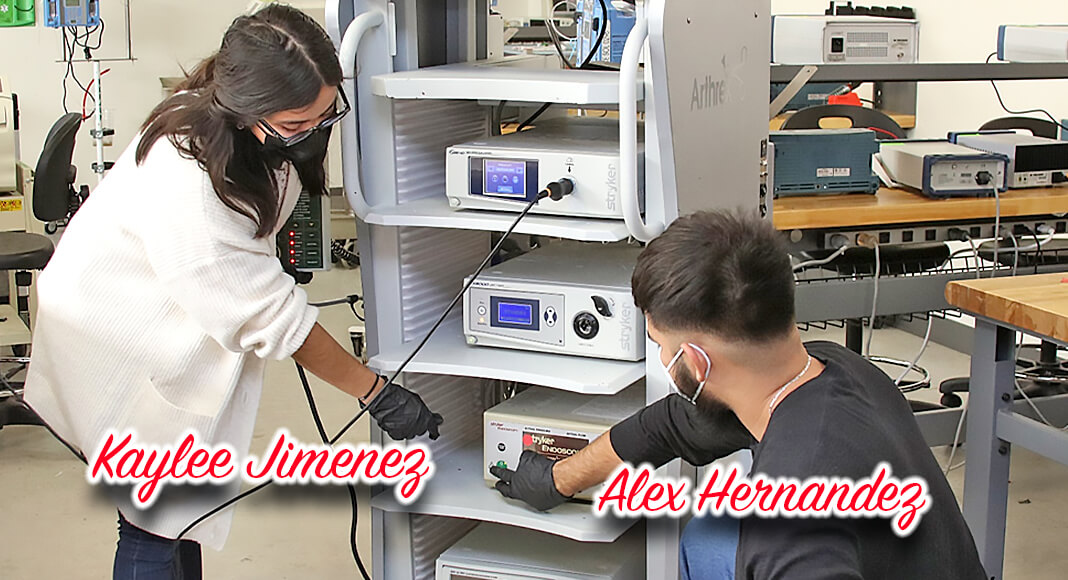
TSTC’s Biomedical Equipment Technology program recently incorporated into its curriculum a Stryker Tower, which provides visualization and documentation for various medical procedures.
Oziel Capetillo, an instructor in the program, said this modern technology is used in operating rooms for certain surgeries.

“Instead of performing a complete incision, it will cut small holes into the skin,” he said. “Then a procedure such as an ACL (anterior cruciate ligament) repair, a shoulder repair or a gallbladder removal can be performed.”
Students in TSTC’s Biomedical Equipment Technology program learn to install and repair medical equipment to keep systems safe and efficient for doctors and patients.
Alex Hernandez, of San Benito, grew an interest in the program because his father is a biomedical technician. The promising career outlook was also a deciding factor in his decision to enroll.
Hernandez, who is pursuing an Associate of Applied Science degree in the program, appreciates the new equipment.
“The camera is an excellent feature,” he said. “It provides an interesting perspective into the work we are doing. A recent lesson we did used safety analyzers to check the amps and the grounding to ensure the voltage is working properly.”
Kaylee Jimenez, of Rio Hondo, also is pursuing an Associate of Applied Science degree in Biomedical Equipment Technology.
What she enjoys most about the program is that she can contribute to the needs of medical personnel by inspecting and repairing medical devices.
Jimenez said the new equipment is intriguing because it allows health care workers to see injuries from a different perspective.
“(They) are able to detect if there are any fractures or a dislocation in the arm or the shoulder,” she said.
Medical equipment repairers can earn an average annual salary of $49,050 in Texas, according to the U.S. Bureau of Labor Statistics. This allied health career has a 12% projected job growth rate in Texas, onetonline.org shows.
TSTC offers an Associate of Applied Science degree in Biomedical Equipment Technology at its Harlingen and Waco campuses.
For more information about TSTC, visit tstc.edu.


