
Mega Doctor News
By Keck Medicine of USC
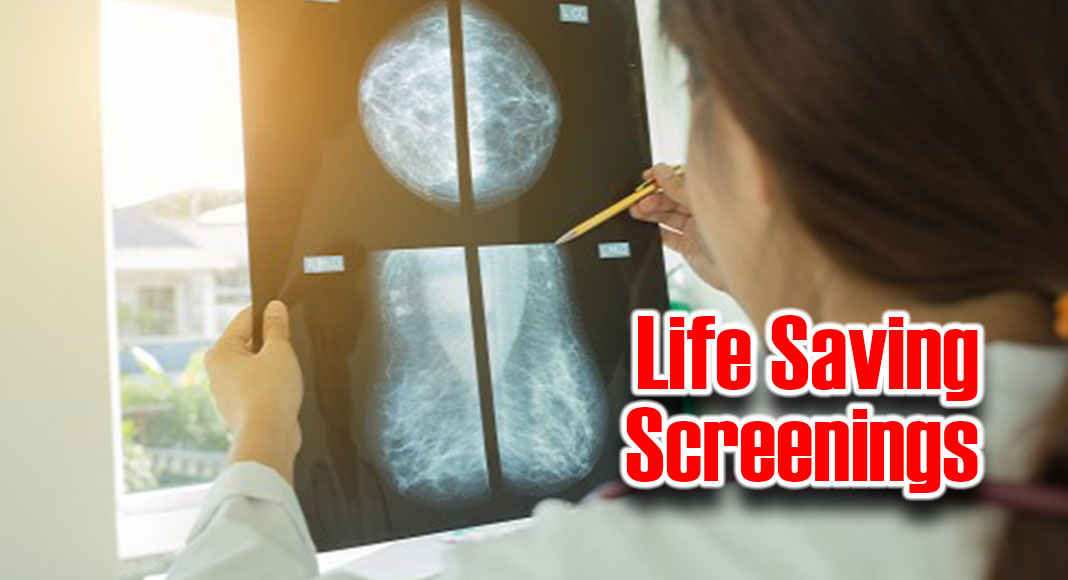
LOS ANGELES — Women may miss their regular cancer screenings for a variety of reasons, which have become more complicated during the pandemic. October is breast cancer awareness month. With women’s health in mind, experts with Keck Medicine of USC and USC Norris Comprehensive Cancer Center explain why screenings and yearly preventive visits are essential, and who may need additional testing offered.
Routine screenings for gynecologic and breast cancers

“There is only one type of gynecologic cancer for which routine screenings are proven to detect early cancers and prevent death — cervical cancer. Cervical cancer is slow-growing and typically preventable with regular pap tests (or pap smears), which look for abnormal cells that can lead to cancer. A newer screening, the HPV (human papillomavirus) test, also screens for cervical cancer. Both screenings can be done during the same visit.
“The recommendation for cervical cancer screenings has changed over the years. The following schedule is now recommended:
Women 21-29 should receive a pap smear every three years (or more frequently, depending on past results). HPV screenings are generally not recommended at these ages.
Women 30-65 should receive both the pap and HPV screenings every three to five years. (The length of time depends on if there is a history of abnormal test results.)
Women 65 or over, depending on their health history, can often stop having cervical cancer screenings. Women should discuss if further screenings are needed with their doctor.
“Mammogram recommendations have also changed. The American College of Obstetrics and Gynecology recommends women receive a mammogram every one to two years beginning at age 40, based on shared decision-making with their health care provider, until they are at least 75 years old.
“It is very important that women receive the screenings available to them. My practice is seeing more later stages of breast and cervical cancer due to women putting off important preventive screenings during the pandemic. I urge women not to delay their cancer screenings.”
Anjali Mahoney, MD, MPH, a family medicine physician with Keck Medicine of USC
When are extra screenings appropriate for gynecologic cancers?
“Ovarian cancer is the rarest but deadliest form of gynecologic cancer. In 75% of cases, it is diagnosed at an advanced stage because the symptoms are hard to detect. Unfortunately, no ovarian cancer screenings have been shown to consistently detect early cancer and prevent deaths.
“However, women with a history of ovarian or uterine cancer or who are at high risk due to family history may benefit from either a transvaginal ultrasound that uses sound waves to examine the uterus, fallopian tubes and ovaries, or the CA-125 blood test that measures the amount of a protein found in many women with ovarian cancer.
“The concern about these screenings is that we see a lot of false positives with the blood test, and the ultrasound picks up masses that may not be cancerous, requiring unnecessary biopsies and surgeries for women.
“I recommend that women with a personal or family history of ovarian or breast cancer or who are of Ashkenazi Jewish or Eastern European ancestry receive genetic testing to see if they carry the BRCA1 and BRCA2 gene mutations, which put them more at risk for breast, ovarian and other cancers.
“My biggest advice for all women is to visit your OB/GYN or family doctor yearly for a pelvic exam, even if you are not scheduled for a pap or HPV test. Often cancer is first detected at these annual visits.”
Annie Yessaian, MD, a gynecologic oncologist with Keck Medicine of USC
When do women need more than a mammogram to detect breast cancer?

“Women with dense breasts can benefit from more thorough breast screenings because dense breasts put them at a higher risk of developing breast cancer. Additionally, it can be challenging to determine the difference between the dense breast tissue and cancer on a mammogram, leading to missed cancer diagnoses.
“I recommend that all women, especially those with dense breasts, ask for a 3D mammogram (digital breast tomosynthesis), which can detect small cancers hidden within dense breast tissues. Scientific literature indicates that by adding a 3D mammogram, there is an increase in invasive cancer detection rates by 40%-50%. Additionally, for the most accurate results, all women should request that a dedicated breast radiologist read their mammograms.
“There are two other options for women with dense breasts. The first is a whole-breast screening ultrasound, which can be performed in addition to a mammogram. For women at a high risk of developing breast cancer, a breast MRI is recommended, alternating with a mammogram every six months. A breast MRI is 99% effective in detecting invasive breast cancer. However, the whole breast ultrasound and breast MRI can pick up benign masses that can require additional workup and biopsies.
“Any woman with dense breasts and at high risk should consult with her doctor to determine the best course of screening unique to her situation and background.”
Mary Yamashita, MD, a diagnostic radiologist specializing in breast imaging with Keck Medicine of USC