






Mega Doctor News
Newswise — Researchers at Wake Forest School of Medicine have shown that a targeted therapy using non-thermal radio waves is safe to use in the treatment of hepatocellular carcinoma (HCC), the most common type of liver cancer. The therapy also showed a benefit in overall survival.
The study findings appear online in 4Open, a journal published by EDP Sciences.
“HCC accounts for nearly 90% of all liver cancers, and current survival rates are between six and 20 months,” said Boris Pasche, M.D., Ph.D., chair of cancer biology and director of Wake Forest Baptist’s Comprehensive Cancer Center. “Currently, there are limited treatment options for patients with this advanced liver cancer.”
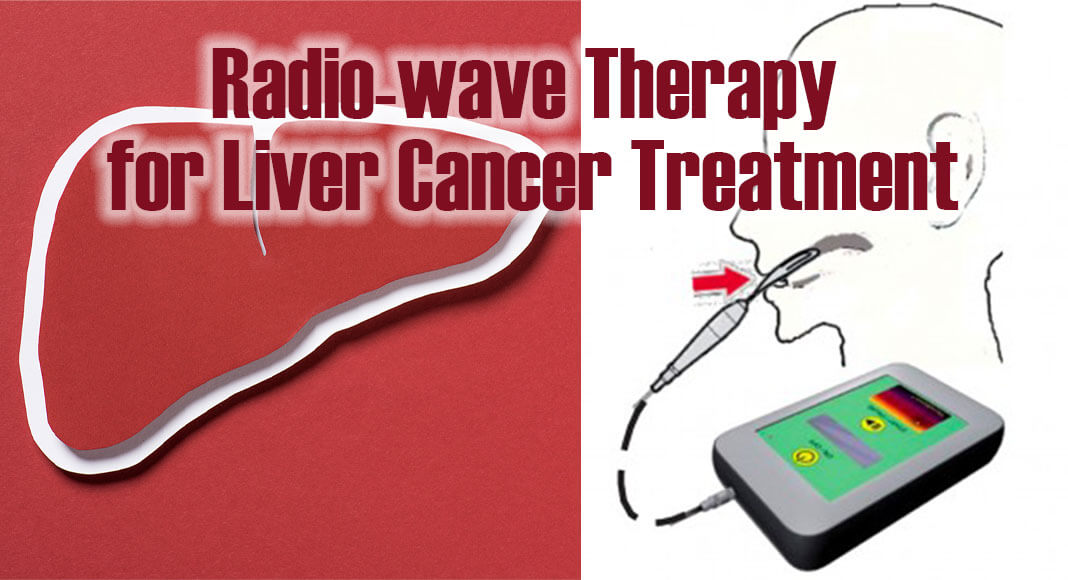
For the study researchers used a device called TheraBionic P1, invented by Pasche and Alexandre Barbault of TheraBionic GmbH in Ettlingen, Germany, that works by delivering cancer-specific, amplitude-modulated radiofrequency electromagnetic fields (AM RF EMF) programmed specifically for HCC.
The frequencies used are specific to the patient’s type of cancer as identified through tumor biopsies or blood work, Pasche said.
Pasche and Barbault discovered radio frequencies for 15 different types of cancer, as previously reported in a study published in 2009 in the Journal of Experimental & Clinical Cancer Research.
TheraBionic P1 is a hand-held device that emits radio frequencies via a spoon-shaped antenna, which is placed on the patient’s tongue during treatment and is administered three times a day for one hour to deliver low levels of radiofrequency electromagnetic fields throughout the patient’s body.
In previous studies, the device, which received breakthrough designation from the FDA in 2019, was shown to block the growth of liver cancer cells in the body without damaging healthy cells.
For the current study, 18 patients with advanced HCC participated and received treatment with the device. Researchers also analyzed previously published data on 41 patients from a phase II study and historical controls from earlier clinical trials.
“Our findings show an improvement in overall survival of more than 30% in patients with well-preserved liver function and also in those with more severe disease,” Pasche said.
Researchers also tracked side effects, and no patients stopped TheraBionic P1 treatment because of adverse reactions.
“We’re encouraged by these initial findings,” Pasche said. “Our study shows a benefit in overall survival, and the treatment isn’t associated with any significant side effects.”
Support for this study was provided by TheraBionic Inc. and funds from Wake Forest Baptist’s Comprehensive Cancer Center.
Pasche noted that the study does have several limitations because of the small sample size and “selection bias inherent in the use of historical control data.”
However, two additional clinical trials are underway and are being led by William Blackstock, M.D., chair of radiation oncology at Wake Forest Baptist’s Comprehensive Cancer Center. One is a single-center study to assess the safety and effectiveness of the TheraBionic device in combination with Regorafenib, a chemotherapy drug, as a second-line treatment. Another multicenter, double-blind, randomized study comparing TheraBionic with placebo will assess the safety and effectiveness of the device as a third-line therapy in the treatment of advanced HCC.
Pasche holds stock in TheraBionic Inc. and TheraBionic GmbH. He is chairman of the board and CEO of TheraBionic Inc. and co-CEO of TheraBionic GmbH. He is also a senior editorial board member of Life Sciences-Medicine of 4Open by EDP Sciences. These relationships are being managed per institutional policy by Wake Forest School of Medicine’s Conflict of Interest Review Committee.