



Mega Doctor News

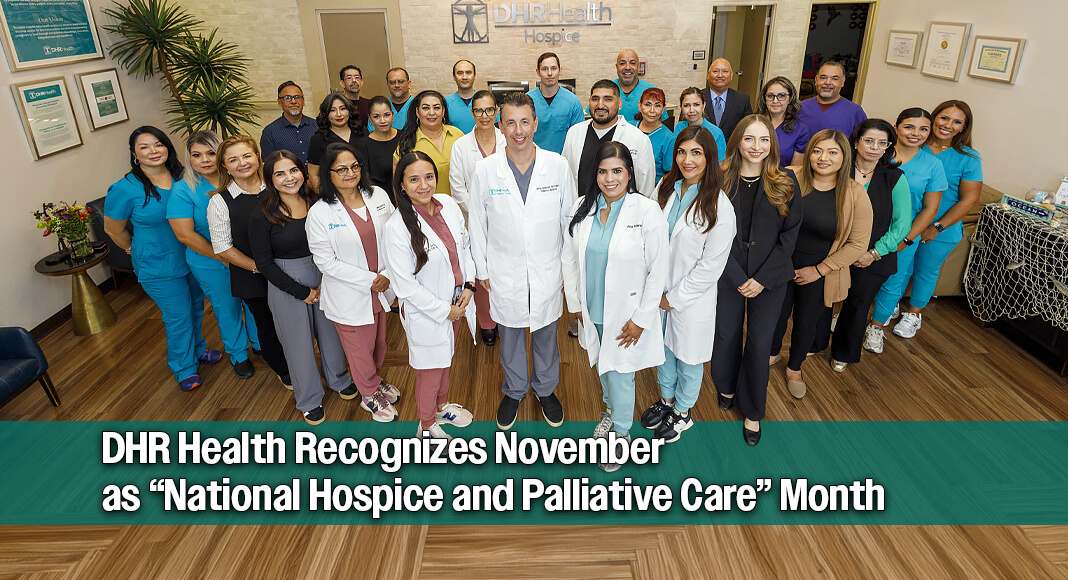
EDINBURG, Texas – DHR Health is pleased to recognize November as “National Hospice and Palliative Care Month.” As we highlight National Hospice and Palliative Care Month, let us remember that healthcare is not solely about treating diseases but also about care for people at end of life. This designation highlights DHR Health’s commitment to treating each patient as a unique individual, honoring their values and wishes, while providing personalized, high-quality and compassionate care. DHR Health Hospice is located at 2655 Cornerstone Blvd in Edinburg.
This month we recognize and celebrate:
• DHR Health Hospice and Palliative Care professionals who provide compassionate care and support to patients every day.


• The patients and families who allow us to become part of their healthcare journey.
• The family members and caregivers who make countless sacrifices for their loved ones.
One of the most asked question is, “What is the difference between Hospice Care and Palliative Care.” Both focus on managing symptoms, relieving pain, reducing stress and providing emotional and spiritual support. Depending on the person’s goals of care is when the differences become apparent.
Hospice Care is a specialized approach to care that is an option for individuals who have been diagnosed with a terminal illness with a life expectancy of six months or less if the illness is allowed to run its natural course. When the person’s goals of care have changed from curative or life prolonging treatment to prioritizing comfort and quality of life, they have the option to enroll in Hospice Care which provides comprehensive comfort directed care for the patient and support for their family. Hospice is usually provided at the patient’s home, but respite care and crisis management may be provided at a facility if needed.
Palliative Care seeks to improve the quality of life of individuals who are living with a serious or life limiting chronic illness. It can begin at any stage of the illness and can be provided alongside treatments intended to cure or control the disease. It typically is like seeing any other medical specialist and is not a comprehensive benefit under most health plans. Patients who wish to continue with curative or disease focused life prolonging medical treatments will usually benefit from palliative care instead of hospice care. Palliative Care providers will often help patients and their families know when it is the right time to transition to hospice care. The transition to hospice care is typically when the burdens and side effects of treatment outweigh the benefits.
“At DHR Health Hospice and Palliative Care, our focus is on supporting the whole patient which is the mind, body and spirit. We care for each patient as a unique individual, delivering care that respects each patient’s wishes and values, while guiding and supporting their families and loved ones every step of the way. Hospice and palliative care are about recognizing the person at the center of care” said Dr. James W. Castillo II, DHR Health Hospice and Palliative Care Medical Director.
DHR Health Hospice encourages the community to learn more about hospice and palliative care services by visiting their website at http://www.dhrhealth.com/services/hospice/ or for more information, call at (956) 362-5780.