






DHR Health’s “Walk and Talk with a Doc” for Breast Cancer Awareness, October 1st in Edinburg

Translate to Spanish or other 102 languages!

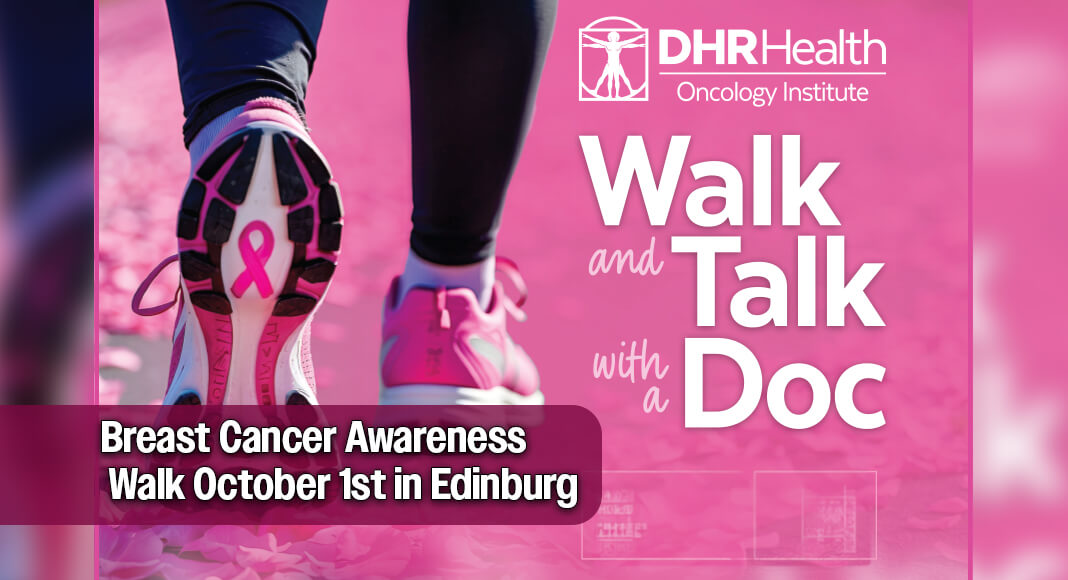
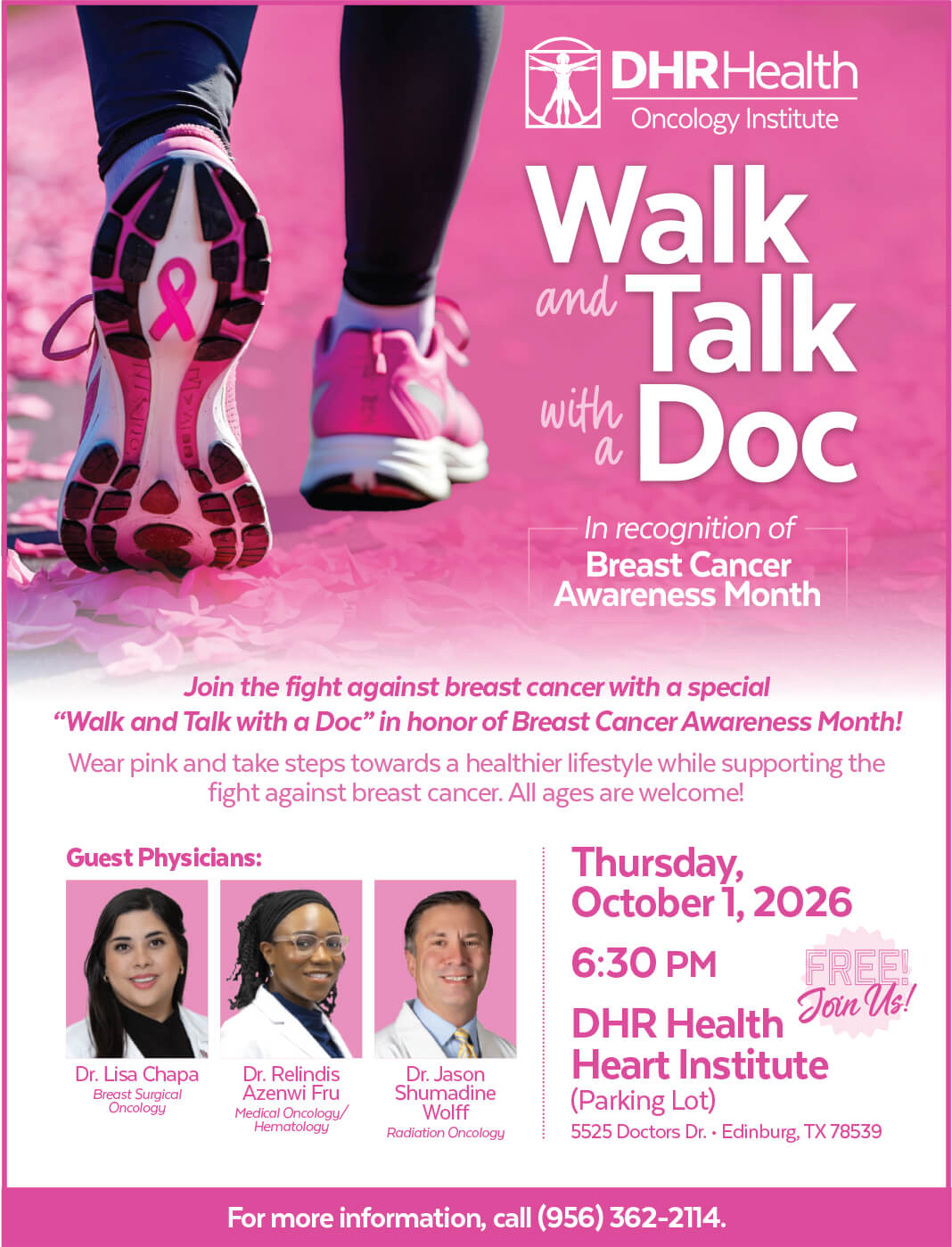
The month of October is “Breast Cancer Awareness Month,” and DHR Health’s Oncology Institute will host “Walk and Talk with a Doc” event on October 1, 2026, at 6:30 p.m. The free event will take place at the DHR Health Heart Institute parking lot, located at 5525 Doctors Drive in Edinburg. Everyone is invited. Attendees are encouraged to wear pink in support of the fight against breast cancer.
The month of October is “Breast Cancer Awareness Month,” and DHR Health’s Oncology Institute will host “Walk and Talk with a Doc” event on October 1, 2026, at 6:30 p.m. The free event will take place at the DHR Health Heart Institute parking lot, located at 5525 Doctors Drive in Edinburg. Everyone is invited. Attendees are encouraged to wear pink in support of the fight against breast cancer. Courtesy image
- Advertisement -

The month of October is “Breast Cancer Awareness Month,” and DHR Health’s Oncology Institute will host “Walk and Talk with a Doc” event on October 1, 2026, at 6:30 p.m. The free event will take place at the DHR Health Heart Institute parking lot, located at 5525 Doctors Drive in Edinburg. Everyone is invited. Attendees are encouraged to wear pink in support of the fight against breast cancer.

The event will begin with short presentations from DHR Health physicians including Dr. Lisa Chapa, breast surgical oncology, Dr. Relindis Azenwi Fru, medical oncology/hematology, and Dr. Jason Shumadine Wolff, radiation oncology.

Their presentations will highlight the importance of prevention, early detection, and treatment options for breast and gynecological cancers. Afterward, participants will join the physicians for a one-mile community walk. During the walk, attendees will have the opportunity to speak one-on-one with the doctors while getting their steps in at the same time.

- Advertisement -

According to the Centers for Disease Control and Prevention, breast cancer is the second most common cancer and the second leading cause of cancer death among women in the United States. About 1 in 8 women will be diagnosed with breast cancer during her lifetime, which makes awareness and early detection critically important.

“This event is designed to promote physical activity, education, and community support—all important factors in the fight against breast cancer,” said Marissa Castaneda, senior executive vice president for DHR Health.

DHR Health invites the community to attend this walk to engage in physical activity, expand their knowledge on prevention, support those fighting breast cancer, and learn more about the resources available at DHR Health.

For more information about the Walk and Talk with a Doc event, call (956) 362-2114. 
- Advertisement -
- Advertisement -

- Advertisement -

More Articles

Insomnia Linked to a Higher Risk of Stroke

 Insomnia is not only associated with poor sleep and reduced daytime functioning, but may also be an indicator of increased health risks. An international review by the European Academy of Neurology, in collaboration with MedUni Vienna, shows a link to stroke, hospital admissions and several neurological and mental health conditions. The findings were published in the high ranking journal “Sleep Medicine Reviews”.

Check Your Car Seat: Nearly 1 in 2 Are Installed Incorrectly

Mega Doctor News AUSTIN – Is your child’s car seat secure? For many...

Multicancer Blood Test Detects 17 Cancer Types in Large Prospective Study

A large prospective study published in Nature Medicine found that a blood test designed to detect multiple cancers identified cancer signals across 17 broad cancer types, such as ovarian, lung, breast and colorectal cancers, and many which do not have recommended screening tests.

STHS Think Pink Campaign Aims to Help RGV Women Detect Breast Cancer Early

Every year, thousands of women receive a breast cancer diagnosis. As breast cancer rates continue to climb across the United States, health experts are urging women not to delay routine screenings that could save their lives
- Advertisement -