








Mega Doctor News
By American Heart Association
When the term “cardiovascular-kidney-metabolic syndrome” was created in 2023 to define how heart disease, kidney disease, obesity and diabetes are connected, one goal was to help health professionals understand the benefits of working together.
Managing those overlapping medical needs can challenge even a highly trained specialist. And if they needed help, imagine the challenges for their patients.

A new guideline for treating CKM syndrome aims to help both.
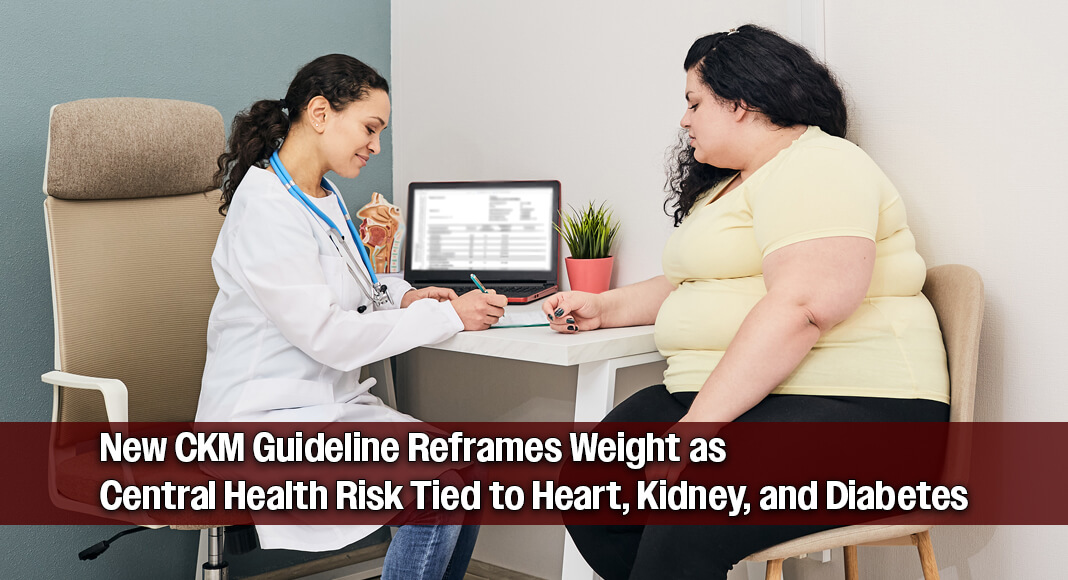
The guideline, published June 9 in the American Heart Association journal Circulation, explains not just the best ways for healthcare professionals to manage CKM syndrome care but also the importance of having a point person to help coordinate and explain that care to patients.
The idea of interdisciplinary care “is incredibly important to CKM syndrome,” said preventive cardiologist Dr. Neha Pagidipati, an associate professor of medicine at Duke University School of Medicine in Durham, North Carolina.
Pagidipati, who helped write the new guideline, said that in a patient with CKM syndrome, “a lot of different organs are involved, and that often means that a lot of different clinicians are involved.” The patient might have a nephrologist for kidney disease, a cardiologist for heart failure and an endocrinologist for diabetes.
Each specialist is likely to zero in on one problem. “Somebody has to be looking at that patient as a whole,” she said.
A patient navigator can fill that role.
What does a patient navigator do?
The name of the job might vary, but the idea of offering a point person as a coordinator or navigator to patients has been used successfully for other complicated health matters, such as cancer.
“The healthcare system is very difficult for patients to navigate in general, especially when they have complex healthcare needs or complex disease states,” said Lacy Harness, a former director of care management for a hospital in Indiana. She oversaw teams of nurses and community health workers who served as navigators, care coordinators and care managers for people with cardiometabolic issues.
“A navigator is there to walk alongside the patient, ensure that they understand where they need to go, and when they need to go, and that they understand what they need to take away from all of those key encounters.” Harness, a registered nurse, helped write a new study that showed the benefits of coordinated care for patients with CKM syndrome. The study was published Monday, June 22, in the journal Circulation: Population Health and Outcomes.
“The patients come into the doctor’s office, and it’s like a whirlwind,” she said, as patients are bombarded with information about medications, testing, results and next steps.
A designated point person, she said, can spend the time needed to review and explain it all.
What can a navigator do for CKM syndrome patients?
The point person acts as both educator and champion, Pagidipati said.
For patients, the navigator can answer questions, help them stay on track with appointments, explain what their medications are doing, and make sure they have access to those medications and communicate concerns to specialists. Some may even be able to prescribe medications, which Pagidipati said could be ideal.
The navigator may also work with a clinical point person – again, job titles can vary, or a single position may work with both patients and clinical staff – to foster communication among those specialists. Pagidipati said the goal would be “to make sure that everybody is on the same page.”
CKM syndrome has multiple stages based on a person’s conditions, such as excess weight, high blood pressure, unhealthy blood glucose level or plaque in their arteries. The more advanced the case, Pagidipati said, the more important the role of the clinical coordinator.
Harness said dealing with conflicting messages is a challenge for many patients. One specialist may start a medication, and another may stop it.
So her team does “a ton of coordination between primary and specialty care.” They also help with needs such as transportation, “because a lot of our patients don’t just have poor health; a lot of them have poor economic situations.”
What expertise does a navigator bring?
“It can look a lot of different ways,” Pagidipati said.
Depending on the system, this role might be a community health worker, social worker, pharmacist or some other health professional.
Most of Harness’ staff were registered nurses who worked within the healthcare setting, while the community workers addressed issues outside of it.
The nurses might check in with patients after a clinic visit and record their blood pressure readings, or simply ask, “Did you pick up your medicines? Are you tolerating them well? How’s everything going?”
That, Harness said, can overcome the common problem of what she calls “clinical inertia,” where a patient sees a doctor, the doctor sets out a plan, and six months later, the patient has not followed through. “They started their medicine, they were having side effects from it, so they quit it. Or it was too expensive, so they never started it, and they never called.”
Consistent care is essential for prevention and management of CKM syndrome, Pagidipati said. Early intervention can prevent or even reverse its progression, but it takes effort. “CKM syndrome cannot just be treated by writing a prescription and then saying, ‘See you in 12 months.’”
Is there evidence care coordination works?
Pagidipati has led research showing that people with cardiovascular disease and Type 2 diabetes who were treated in clinics that emphasized cooperation among specialists and included someone who coordinated care were more likely to be prescribed the recommended medications than people who received standard care.
“So we’ve seen it work in a randomized trial setting,” she said. “We know that it can work. We just have to learn now how to implement it across different care settings.”
Harness has seen the difference a coordinator can make to patients.
Patients with multiple, overlapping conditions often feel “overwhelming stress and failure,” believing that “my doctor’s going to be disappointed.”
But “when they have those champions in their corner, they get excited,” she said.
A care coordinator can provide help and encouragement that go beyond directives, she said. Patients respond by saying, “Everybody’s always told me I needed to lose weight or get my blood sugar or my blood cholesterol or my blood pressure down, but nobody’s ever really given me the tools and the support that I needed to actually do it.” Until now.
Regular check-ins provide a chance to form a connection, Harness said. Sometimes, patients will excitedly call a coordinator ahead of an appointment to say, “I just want you to know I’ve lost 15 pounds, and I can’t wait to come see my doctor next week.”
How do you find a care coordinator?
Dedicated care coordinators aren’t available in all healthcare systems, Pagidipati said. Although studies have suggested that interdisciplinary care for CKM syndrome is cost-effective, the financial model is still being worked out, she said. “I think that’s the conversation that we’re trying to spark now.”
Harness recommended that CKM patients ask their care team whether a coordinator is available. If not, a patient can ask about other kinds of help. “They may have diabetes educators, or they may have a heart failure nurse, or they may have somebody who can provide those extra layers of support.”
She admits she’s biased, but she thinks care coordinators can be a “transformational” part of CKM care. “It’s just a win-win all the way around.”
Nearly 9 in 10 adults in the U.S. have at least one CKM risk factor. Learn how the American Heart Association’s CKM Health Initiative is helping individuals and healthcare professionals take steps toward better heart, kidney and metabolic health. These efforts include connecting individuals with an Association Navigator offered in participating sites in select geographical markets.
Information source: American Heart Association


