








Tips for Dealing with Restless Legs Syndrome

Translate to Spanish or other 102 languages!

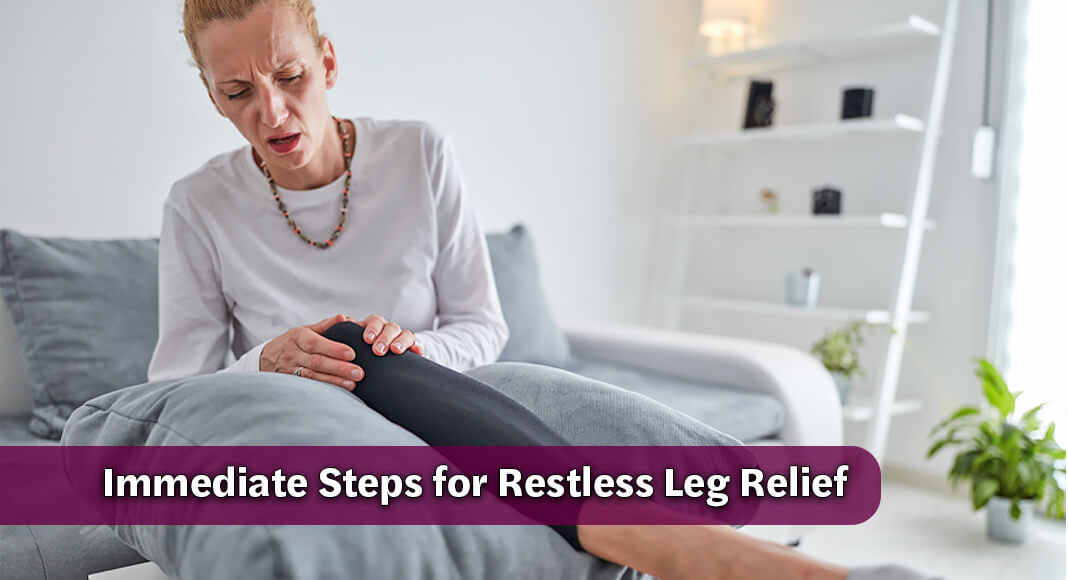
Do you feel like you constantly need to move your legs when lying down? You could be dealing with restless legs syndrome. Image for illustration purposes
- Advertisement -

CLEVELAND CLINIC – Do you feel like you constantly need to move your legs when lying down? You could be dealing with restless legs syndrome. 

Reports show it affects roughly 30 million people here in the United States.

“Restless legs syndrome can be a terrible disorder and really interfere with your ability to fall asleep. It’s a clinical diagnosis. It’s defined as the sensation of restlessness, or maybe itchiness, or pain, usually in your legs. And it usually happens at nighttime or when you’re at rest, like when you’re trying to go to sleep. And it can interfere, again, with your ability to fall asleep,” explained Brian Chen, MD, sleep specialist at Cleveland Clinic.

- Advertisement -

Dr. Chen said restless legs syndrome can be caused by a number of different factors, including having low levels of iron. 

He explains that sometimes our guts don’t absorb iron properly, or in some cases, we may not be getting enough iron from our diets. 

Iron can be found in foods like beef, chicken, eggs, fish and dark leafy greens. 

Dr. Chen said treatment for restless legs syndrome can vary and may be something as simple as taking an iron supplement. 

- Advertisement -

However, medication may also be necessary.

“There are also less common medications that are a little bit more cutting edge for restless legs that are really hard to treat, including some light opiates in a controlled state. There are even devices that are used to control restless legs. There’s a device on the market that you wear around your knee and then it stimulates the leg to make it feel like it’s moving so you don’t have to move it, and that way you’re able to fall asleep,” he said.

Dr. Chen adds that restless legs syndrome can also happen in children. 

If you notice your child is tossing and turning more than normal in bed, it’s important to let their pediatrician know.  

- Advertisement -
- Advertisement -

- Advertisement -

More Articles

From STC Graduate to Shaping the Future of First Responders

When Karina Heredia first enrolled at South Texas College as a dual credit student, she never imagined she would one day help prepare the next generation of first responders at the very institution that helped shape her future.

DHR Health Offers Advanced, Comprehensive Care for Scoliosis Patients–Early Detection is Key!

In recognition of “National Scoliosis Awareness Month” in June, DHR Health is reminding the community that comprehensive scoliosis care is available close to home through its Scoliosis Rehabilitation Clinic and Orthopedic Spine Center of Excellence.

Teaming Up to Deliver Blankets and Comfort to Cancer Patients at DHR Health

Bert Ogden Subaru, in partnership with the Blood Cancer United, recently brought comfort and encouragement to patients receiving care at DHR Health’s Oncology Institute by presenting blankets and heart-shaped pillows to individuals courageously battling cancer.

How to Manage Back Pain on Your Next Vacation

As the travel season hits its peak, millions are preparing to spend hours on planes, trains, and in cars. That can dampen the excitement for the 1 in nearly 12 people worldwide who live with chronic low back pain.  But with proper planning, it is possible to travel without aggravating back conditions and enjoy a well-deserved break, say Hackensack Meridian Health orthopedic specialists.
- Advertisement -

