









Mega Doctor News
UT Health San Antonio
SAN ANTONIO – While some say having lots of kids can make you lose your faculties, a new study suggests otherwise.
Research co-led by UT Health San Antonio, the academic health center of The University of Texas at San Antonio, associates a greater number of live births with a reduced risk of stroke or brain damage for mothers. As more women than men have strokes, the finding is seen as significant in helping determine risk.

The study, titled, “Number of Live Births as a Protective Factor Against Clinical and Covert Brain Infarcts: The Framingham Heart Study,” was published on April 7 in the Journal of the American Heart Association, and on behalf of the association.
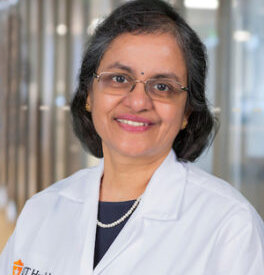
“Our findings would suggest that reproductive factors – for example, number of live births – may be an additional factor to consider when assessing stroke risk in women,” said Sudha Seshadri, MD, a behavioral neurologist, professor and founding director of the Glenn Biggs Institute for Alzheimer’s and Neurodegenerative Diseases at UT Health San Antonio.
She is joint senior author of the study with Emer R. McGrath, PhD, with the School of Medicine at the University of Galway in Ireland. “Inclusion of this risk factor in female-specific clinical prediction rules for stroke may enhance risk prediction in women,” Seshadri said.
Reproductive factors in stroke
The study notes that stroke is a major cause of morbidity and death, and disproportionately affects women, who account for 57% of all strokes in the United States.
Reproductive factors – for example, age at first menstrual period, age at menopause, circulating estrogen levels, number of pregnancies and use of hormone replacement therapy – affect overall lifetime exposure to estrogen, and therefore have been implicated as important predictors of future stroke risk in women.
Generally, greater exposure for a longer period or to higher levels of the body’s own estrogen has recently been associated with a lower burden of cerebral small-vessel disease in women. However, evidence for some factors, such as live births, has been conflicting.
For this study, researchers determined the association between number of live births and other female-specific reproductive factors and subsequent risk of stroke and magnetic resonance imaging markers of vascular brain injury in a community-based cohort. That cohort was the Framingham Heart Study, a long-term and ongoing community-based observational study of residents in Framingham, Massachusetts, dating to 1948. Seshadri serves as senior investigator.
Live births and decreased risk
The scientists followed 1,882 women over time, and who were stroke-free at a baseline examination during 1998 to 2001 and at a mean age of 61. They considered reproductive factors including the women’s number of live births given, age at menopause, postmenopausal hormone replacement therapy use, and serum estradiol and estrone levels.
During a median 18-year follow-up, they assessed the same participants for number of strokes from all causes, and secondarily for “covert brain infarcts” – like brain lesions representing vascular damage from restricted or reduced blood blow – and white matter hyperintensity volume, detected by MRI.
Over that period, 126 women had strokes. The researchers used statistical analyses known as multivariable Cox proportional hazards models adjusting for major vascular risk factors, and determined that three or more live births were associated with a reduced risk of stroke. Similarly, they found that three or more live births were associated with decreased risk of vascular brain injury.
“This may be an important factor to include in female-specific clinical prediction rules for stroke, but will require further study,” Seshadri said.
The researchers found no significant association between other reproductive factors and stroke or MRI markers of vascular brain injury.
Other authors of the study are with Boston University; Mass General Brigham, Boston; and University of California-Davis.
Information source: UT Health San Antonio


