Mega Doctor News
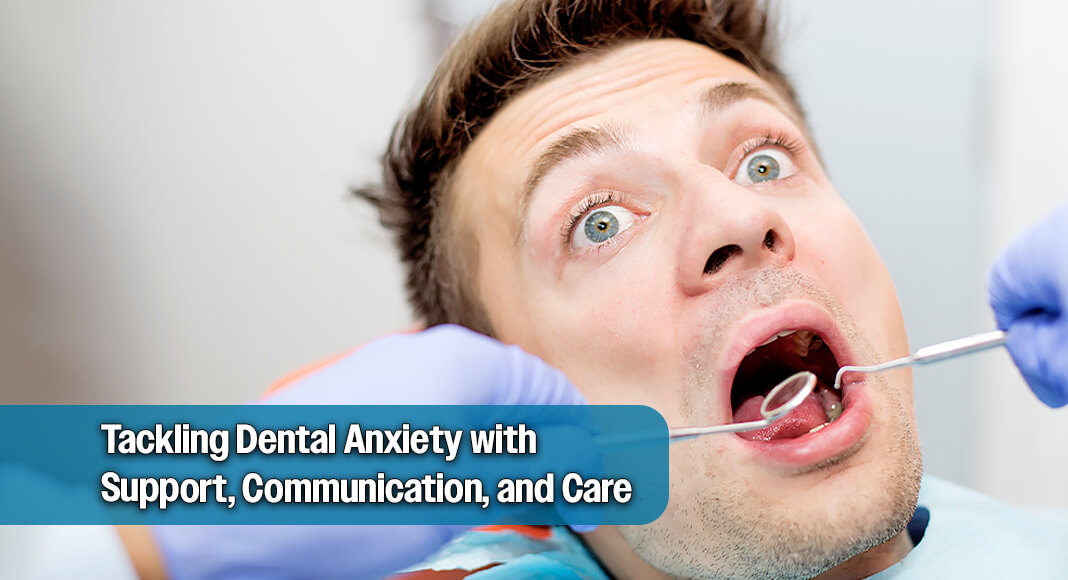
Newswise — Settling into a cushy reclining chair and closing your eyes while soft music plays is appealing, except perhaps at the dentist’s office. According to a recent report in the Journal of the American Dental Association, 72% of American adults harbor some degree of fear about going to the dentist, and almost 27% say their fear is severe.
Fortunately, dentists are well-equipped to soothe nerves in addition to maintaining smiles.

“Fear is a real thing. The mouth is a very vulnerable and very sensitive part of our bodies, and people are afraid of the possibility of feeling pain,” says Christina Pastan, an assistant clinical professor in the Department of Endodontics and the director of mind-body wellness at Tufts University School of Dental Medicine. Pastan and Edward Lahey, chair of the Department of Oral and Maxillofacial Surgery, explain how to take the bite out of daunting dental visits.
Share your fears with your dentist.
A good provider will acknowledge your anxiety and explain every step of the procedure, along with any pain-control options.
“Sensitivity is key to building trust,” says Pastan. Specializing in root canals, she and her colleagues are accustomed to seeing jittery patients who need reassurance. Being open about your fear won’t hurt anyone’s feelings.
“Have no shame in expressing this. I think that the dentist-patient relationship is all about trust, communication, and connection,” she says.With honest communication, dentists can tailor their approach; for instance, alerting needle-averse patients to close their eyes.
“When patients know their dentists are present and with them, they do better,” she says.“ Patients could say: ‘I’m very sensitive. Before you start, is there anything you can do to assure me I won’t feel anything?’”
Pastan also explains that, despite an anesthetic, some dental situations can still evoke pain, and an alternate type of injection may need to be given. Pastan reassures her patients that, if they do sense pain, it will be a momentary experience and that she’s prepared with another technique that will take care of it.
“Articulating confidence and a plan often puts patients ease. Establishing trust can be incredibly reassuring for all patients, regardless of their dental anxiety,” she says.
Jot down worries ahead of time.
If you’re going to be antsy on the day of the visit, write down your worries, previous dental experiences, and medication concerns when you’re in a clearer mindset.“Patients sometimes aren’t at their best when they’re really anxious,” Lahey says. “When patients come with high anxiety levels, they almost always reference some bad experience they had with a provider in the past. As a clinician, it’s helpful to know that right up front.
Share your full medical history.
Your dentist needs to know all your conditions and medications, especially if anesthesia is involved, to avoid drug interactions.
“Patients might come in thinking we’re just focusing on their mouth or their jaws. We’re taking care of the whole person,” Lahey says. “Full medical history is important, as it allows us to know what anxiety-management strategies and medications have worked in the past. In addition, it’s critical for the treating clinician to know of any medications a patient may take on a regular basis to treat anxiety, to prevent possible drug-drug interactions.”
Close your eyes, if it helps.
“When you’re having a procedure done on your foot or your arm, you can turn your head away. But we’re coming right at you,” Lahey says. Closing your eyes can reduce visual stress during injections such as nerve blocks.
Practice breathing through your nose.
Dental equipment can make mouth-breathing difficult, leading to panic. Pastan encourages patients to practice slow nasal breathing in advance. Exhaling for twice as long as you inhale activates the parasympathetic nervous system, calming heart rate and deepening breathing.
“I guide patients through this breathing and start to see them loosen in the chair,” Pastan says.
It’s never too late to ask questions.
Patients sometimes feel locked into a decision once an appointment starts, like strapping into a roller coaster. Lahey notes that raising concerns—even at the last minute—can prevent anxiety from spiraling. You can still discuss pain control or different approaches in real time.
“Don’t think: I can’t turn back. We can move forward with treatment while I talk to you about what’s happening,” Lahey says.
Ask about pain management.
For procedures like root canals, many patients need ibuprofen once anesthesia fades. Ask what medications are safe and how long discomfort typically lasts. Knowing what to expect reduces fear.
“As providers, we’re here to make things better. No one wants to inflict pain,” Lahey says.
Adjustments should be made to support your needs. If your dentist doesn’t recognize your anxiety, it’s OK to switch providers.
“Don’t feel that you’re the victim in the chair … The patient is the most important part of the interaction,” Pastan says.
————
Story sidebar:
Your child might not be chomping at the bit to visit the dentist, but you can make the experience less stressful. Cheen Loo, chair of pediatric dentistry at Tufts University School of Dental Medicine, offers practical strategies to help kids feel prepared and supported.
Keep your own anxiety in check.
Studies show that parental dental fear can easily transfer to a child, Loo says. Use neutral, kid-friendly language to explain what will happen. For example, she suggests saying the dentist will “count” their teeth rather than check them. If a child needs local anesthesia, she calls it “sleepy juice.”
“There are ways to use more pleasant language so that it causes less anxiety in kids and during treatment,” she says.
Prep them with role models.
Loo introduced her own children to dental visits with The Berenstain Bears Visit the Dentist. Many beloved characters—Daniel Tiger, Curious George—also have dentist-themed books or videos that help kids know what to expect.
Bring a comfort item from home.
The dental chair can feel unfamiliar, so a favorite stuffed animal or toy can offer reassurance.
Use sensory distractions.
A favorite song or video fired up on your phone can help keep kids occupied, especially during longer procedures. Standard pediatric cleanings typically take about 30 minutes, though more complex visits may run longer.
Ask about anxiety medications.
For more involved procedures, Loo may use nitrous oxide or sedatives such as Midazolam, which lowers anxiety and has an amnesic effect. Kids frequently don’t even recall the procedure afterward.
“This reduces their traumatic experience,” Loo says, making future visits easier.
Empower your kids.
Feeling helpless is a major source of dental anxiety. Loo recommends deciding on a simple signal—like raising a hand—to request a break.
“It gives the child some control over what’s going on,” she says.